
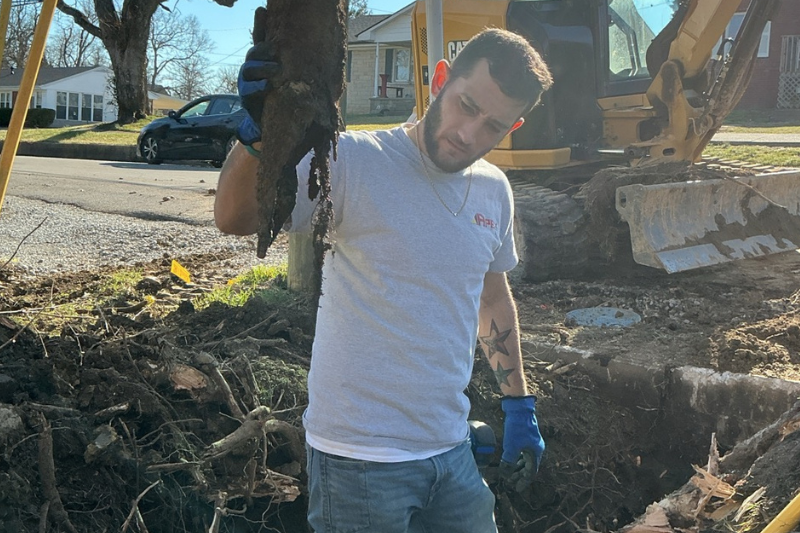
Tree roots and any underground pipes don’t mix. Tree roots naturally search for moisture, and once found, they work their way into any crevice. This includes sewer lines and waterlines. Once inside, they continue to grow, eventually filling up the whole pipe, clogging it, and breaking it. Roots cause backups and slow drains. Both are inconvenient for homeowners in Lexington, KY.
Root growth usually starts slowly and unnoticed, but they eventually turn into a major plumbing problem.
How do tree roots get into pipes?
Roots typically find a weak spot in a pipe. They find weak spots such as
- Small cracks
- Pipe joints
- Separated connections
- Aging cast-iron pipes
- Damaged lines
Once a root finds moisture, it continues to grow towards the source. These issues are found deeper in a sewer line than a simple clog.
Why do roots get worse over time?
Depending on the tree, some roots grow and mature fast, while others are incredibly slow. You may go years living at your Lexington, KY home before noticing a root issue. Some roots grow quickly and need to be removed every couple of weeks. Slow-growing roots can take several years to create problems in your plumbing. Roots expand over time and can lead to:
- Repeated clogs
- Backups
- Leaks underground
- Pipe deterioration
- Costly repairs
How do plumbers diagnose root intrusion?
One of the best ways to confirm root intrusion is with a camera inspection. Camera inspections give a clear look into:
- Roots growth
- Cracks or separated joints
- Scale buildup
- Collapsed sections
- Other blockages
How are roots removed from pipes?
Our plumbers have several different ways of dealing with roots.
- Hydrojetting: This tool uses high-pressure water that can cut through roots and flush out any buildup.
- Mechanical Root Cutting: Specialized equipment can break up and remove roots from the lines.
- Pipe Repair or Replacement: Depending on what we find during our inspection, we may be able to repair or replace the section that allowed the roots to enter.
Prevention is less expensive and usually is less disruptive than dealing with major plumbing problems.
Will the roots come back?
Roots do come back. Unless you remove the tree, shrub, and any lingering root system, there’s always a possibility the roots can grow back. Replacing a line helps because there is less chance for the roots to find an entry point.
How to prevent roots from coming back
Homeowners can reduce the risk of root intrusion by:
- Scheduling a camera inspection
- Addressing slow drains early
- Replacing old and damaged lines
- Being cautious when planting new trees and shrubs
- Keeping up with recommended maintenance
When do I need to call a plumber?
It’s time to call a plumber when you’re constantly dealing with backups and clogs. Recurring issues point to a bigger problem and need intervention that can’t be fixed with store-bought items. A professional inspection can confirm the presence of roots and the best treatment plan.
Licensed Plumbing Professionals
Our plumbers are ready to deal with any problem you may have. Roots are a common problem that creates serious issues for homeowners. We’re experienced in diagnosing and providing the best treatment plan for your specific root issue. If you think you may be dealing with roots in your plumbing system, schedule online or call us today!