
Drain Snaking vs. Hydro Jetting: Which Does Your Home Need?
A slow drain is easy to ignore until the water stops going down at all. When that happens, most homeowners just want it fixed fast. But the method used to clear it matters more than you’d think. In the drain snaking vs. hydro jetting debate, the two methods solve the same problem in very different ways, and picking the wrong one can mean you’re calling a plumber again in a few weeks.
Here’s how each method works, when each one makes sense, and the signs that your home needs more than a quick snake.
Table of Contents
- What Is Drain Snaking?
- What Is Hydro Jetting?
- Drain Snaking vs. Hydro Jetting: Side by Side
- 5 Signs Your Drains Need Hydro Jetting
- Drain Snaking vs. Hydro Jetting: How to Decide
What Is Drain Snaking?
A drain snake (also called an auger) is a long, flexible steel cable fed into the drain line. As it turns, the tip either breaks up a clog or hooks onto it so it can be pulled back out. Handheld versions work for sinks and tubs, while motorized machines can reach much farther into a main line.
Snaking is the go-to method for:
- Single, isolated clogs: a hair clog in the shower or a wad of paper in the toilet line
- Solid obstructions: a child’s toy, a hygiene product, or something else that shouldn’t have been flushed
- Quick relief: getting water moving again the same day
The limitation is that a snake punches a hole through the clog rather than cleaning the pipe. Grease, soap scum, and mineral scale coating the pipe walls stay behind, and that leftover buildup is often where the next clog starts.
What Is Hydro Jetting?
Hydro jetting uses a specialized hose and nozzle that sprays water at thousands of PSI. Forward-facing jets cut through the blockage, while rear-facing jets scour the full inside diameter of the pipe as the hose is pulled back. The result is closer to a pressure-washed pipe than a pipe with a hole poked through the clog.
Hydro jetting handles what a snake can’t:
- Grease and fat buildup from years of kitchen use
- Mineral scale from Kentucky’s hard water
- Tree root intrusion in sewer lines
- Sludge and debris sitting along the bottom of a main line
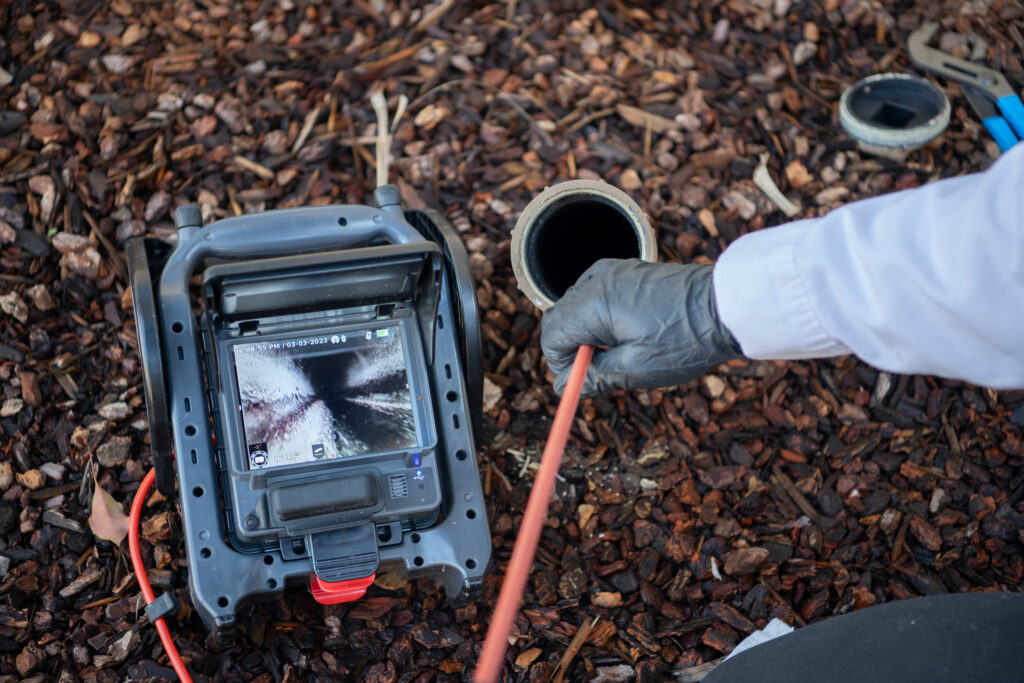
Because it’s more powerful, it should always be done by a trained technician. Before we jet a line, we typically run a camera inspection first to confirm the pipe is in good enough shape to handle the pressure. Older, cracked, or badly deteriorated pipes may need repair instead.
Drain Snaking vs. Hydro Jetting: Side by Side
The easiest way to compare drain snaking vs. hydro jetting is to look at what each one leaves behind.
| Drain Snaking | Hydro Jetting | |
|---|---|---|
| How it works | Rotating cable breaks up or pulls out the clog | High-pressure water scours the whole pipe |
| Best for | Single clogs and solid objects | Grease, scale, roots, and recurring clogs |
| Cleans pipe walls? | No | Yes |
| Upfront cost | Lower | Higher |
| How long results last | Until buildup causes the next clog | Much longer, since buildup is removed |
| Safe for older pipes? | Generally yes | After a camera inspection confirms pipe condition |
Neither method is “better” across the board. Snaking is the right call for a one-time clog. Hydro jetting is the right call when the pipe itself is the problem.
5 Signs Your Drains Need Hydro Jetting
A snake will clear most everyday clogs. But if any of these sound familiar, the problem is probably deeper in the line:
1. The same drain keeps clogging. If you’ve had the kitchen sink snaked twice this year and it’s slow again, the clog isn’t the problem. The buildup on the pipe walls is. Snaking again just buys time.
2. Multiple drains are slow at once. When the tub, toilet, and sinks are all draining poorly, the issue is usually in the main line, not in the individual fixtures. That’s where grease and sludge collect over years.
3. You hear gurgling or smell sewage. Gurgling drains and sewer odors often point to a partially blocked main line that’s trapping air and gas. A sewer line inspection can confirm what’s going on before it turns into a backup.
4. You have mature trees near your sewer line. Roots are drawn to the moisture in sewer pipes and can work into joints and small cracks. A snake may cut a path through them, but hydro jetting clears them out much more thoroughly.
5. You run a busy kitchen or a commercial property. Restaurants, apartment buildings, and large households send a lot of grease and food waste down the drain. Scheduled hydro jetting is often cheaper than repeated emergency calls.
One note for homes on septic: harsh chemical drain cleaners can harm the bacteria your system depends on, and the EPA’s septic guidance recommends keeping them out of the system. Mechanical cleaning (snaking or jetting) avoids that problem entirely.
Drain Snaking vs. Hydro Jetting: How to Decide
Before you call, ask yourself:
- Is this the first clog in a while, in one drain? (Snaking is usually enough)
- Has this drain clogged before, or are several drains slow? (Consider hydro jetting)
- Are there trees, an older home, or heavy kitchen use involved? (Ask about a camera inspection first)
- Are you tired of paying for the same fix twice? (Hydro jetting is often the cheaper long-term answer)
You don’t need to make the drain snaking vs. hydro jetting call on your own. When our technicians come out for drain cleaning, we’ll tell you honestly which method your line needs. If a snake will do the job, that’s what we’ll recommend. If the camera shows years of buildup or roots, we’ll show you the footage so you can see it for yourself.
For homeowners who want to stay ahead of clogs, regular sewer line maintenance and our Apex Advantage Plan help catch problems before they turn into a backup on a holiday weekend.